


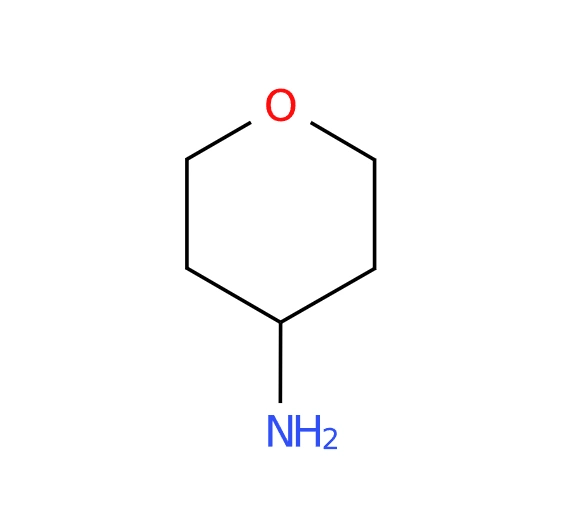
Products Description of 4-Aminotetrahydropyran CAS#38041-19-9
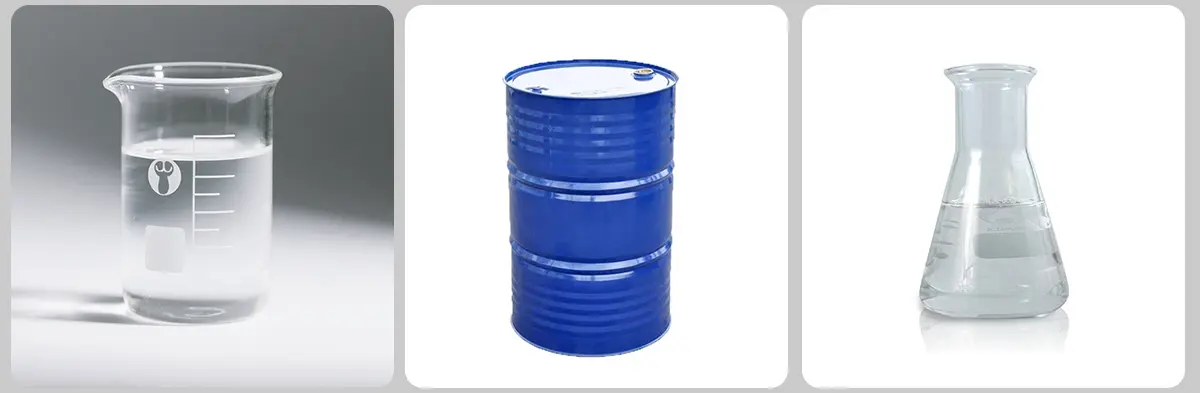
4-Aminotetrahydropyran, alternatively named tetrahydro-2H-pyran-4-ylamine, is an organic substance bearing the molecular formula C₅H₁₁NO and a molecular weight of 101.147, with CAS No. 38041-19-9. This product is a clear liquid ranging from colorless to light yellow. Its density is 1.0±0.1 g/cm³, boiling point 151.4±33.0 °C at 760 mmHg, flash point 49.3±18.6 °C, and vapor pressure 3.7±0.3 mmHg at 25 °C.
4-Aminotetrahydropyran Chemical Properties
| Boiling point | 60 °C |
| Density | 0.977 g/cm3 at 25 °C |
| Refractive index | n20/D 1.463 |
| Fp | 54°C |
| Storage temp | Keep in dark place,Inert atmosphere,2-8°C |
| Pka | 9.63±0.20(Predicted) |
| Form | liquid |
| Color | Colourless |
| InChIKey | AHVQYHFYQWKUKB-UHFFFAOYSA-N |
| CAS DataBase Reference | 38041-19-9(CAS DataBase Reference) |
| Hazard Codes | Xi,Xn |
| Risk Statements | 10-34-41-22-37/18 |
| Safety Statements | 16-26-36/37/39-39 |
| RIDADR | 2734 |
| WGK Germany | 1 |
| HazardClass | IRRITANT |
| PackingGroup | Ⅲ |
| HS Code | 29321900 |

Product Application of 4-Aminotetrahydropyran CAS#38041-19-9
Pharmaceutical Intermediate: It serves as an essential building block for the preparation of multiple anticancer agents, including aminothiazole derivatives.
Biochemical Research Reagent: Within biochemical studies, this compound can suppress ATP-dependent efflux pumps of Gram-negative bacteria, which ultimately triggers bacterial cell death.
Enzyme Inhibitor: It exerts inhibitory effects on selected enzymes that follow transfer-type catalytic mechanisms, kinases being a representative example.