


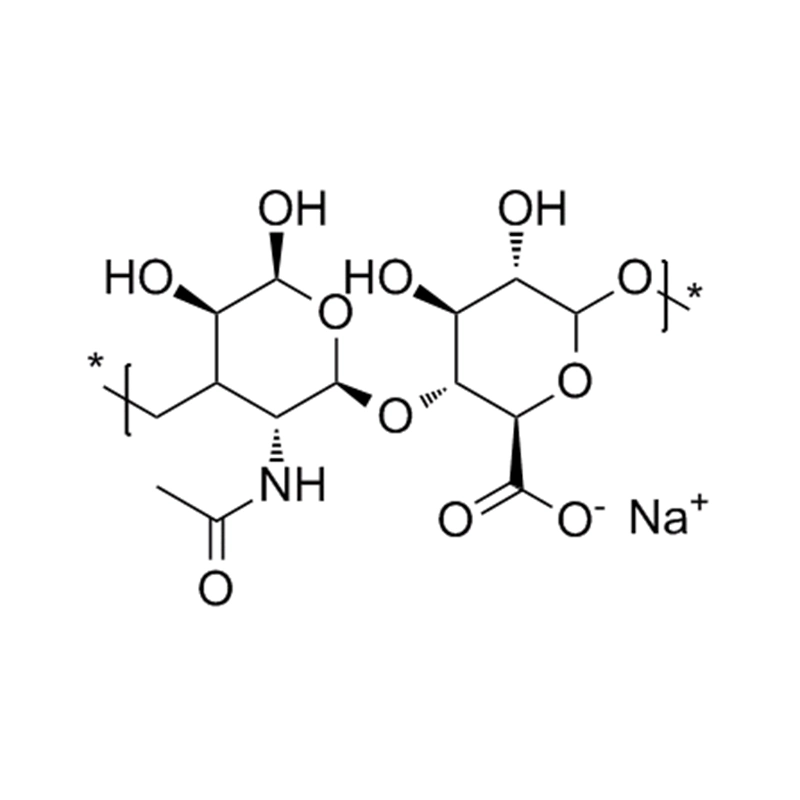
Sodium hyaluronate, also referred to as sodium glycosaminoglycan, is a biologically active substance found abundantly in the human body. This high-molecular-weight linear mucopolysaccharide consists of repeating disaccharide units made up of glucuronic acid and acetylated hexosamine, with a molecular weight of around 1 million. When dissolved in water, sodium hyaluronate forms a viscous and elastic solution that mirrors the physiological acidity and ionic strength of body fluids. Its molecular structure is adaptable, allowing it to be injected with a fine syringe. The non-inflammatory components of sodium hyaluronate are extracted and marketed under the name Healon. When 10 mg of Healon is dissolved in 1 mL of physiological saline, its viscosity increases by 200,000 times compared to aqueous humor or saline. Healon has a protein content of less than 0.5%, making it a highly pure, sterile solution.
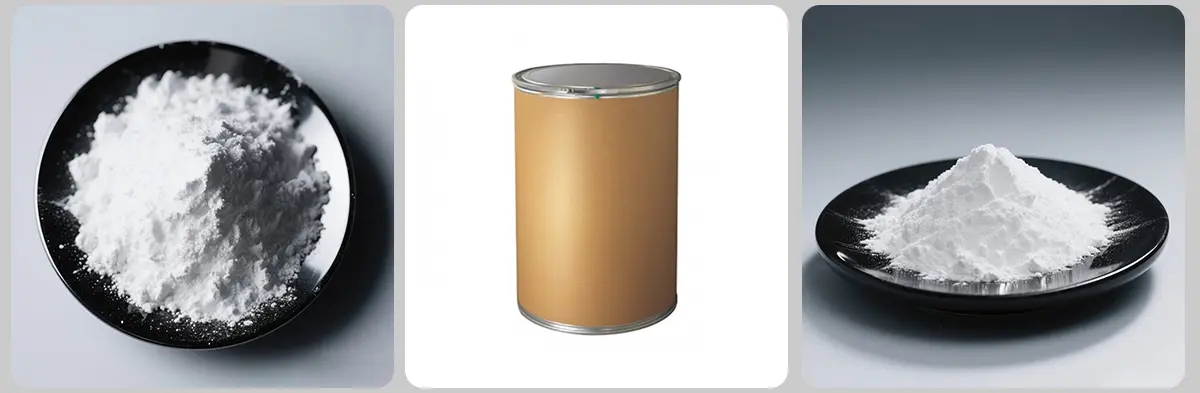
Parameters
Melting point | >209°C (dec.) |
alpha | D25 -74° (c = 0.25 in water): Rapport et al., J. Am. Chem. Soc. 73, 2416 (1951) |
storage temp. | -20°C |
solubility | H2O: 5 mg/mL, clear, colorless |
form | Powder |
color | White to cream |
PH | pH(2g/l,25℃) : 5.5~7.5 |
biological source | chicken (rooster comb) |
Water Solubility | SOLUBLE |
Merck | 13,4776 |
Stability: | Stable. Incompatible with strong oxidizing agents. |
InChI | InChI=1/C14H23NO11.Na/c1-4(17)15-5-2-6(18)7(3-16)24-14(5)26-10-8(19)9(20)13(23)25-11(10)12(21)22;/h5-11,13-14,16,18-20,23H,2-3H2,1H3,(H,15,17)(H,21,22);/q;+1/p-1/t5-,6+,7-,8-,9-,10+,11+,13-,14+;/s3 |
InChIKey | MAKUBRYLFHZREJ-JWBQXVCJSA-M |
SMILES | [C@@H]1(O[C@H]2[C@H](O)[C@H]([C@H](O)O[C@@H]2C(=O)[O-])O)O[C@H](CO)[C@@H](O)C[C@H]1NC(=O)C.[Na+] |&1:0,2,3,5,6,9,15,18,21,r| |
LogP | -6.623 (est) |
CAS DataBase Reference | 9067-32-7(CAS DataBase Reference) |
Safety Information
Hazard Codes | B,Xi |
Risk Statements | 36/37/38 |
Safety Statements | 22-24/25-36/37/39-27-26 |
WGK Germany | 3 |
RTECS | MT7250000 |
F | 3-10 |
HS Code | 39139000 |
Toxicity | LD50 oral in rabbit: > 1gm/kg |

Sodium hyaluronate is widely categorized and utilized across multiple industries. It serves as a biochemical reagent (including protein and carbohydrate types), a standard reference substance, and a raw material in fields such as organic chemistry, cosmetics, pharmaceuticals, and nutritional supplements. It is used as a vitamin-type nutrient fortifier, food additive, cosmetic ingredient, and sodium organic acid salt. It also functions as a moisturizing agent in daily chemical products, a substrate or API in pharmaceutical applications, and a key compound in health supplements. In addition, sodium hyaluronate is featured in enzyme and coenzyme formulations, impurity reference materials, and inorganic chemical applications.