


Product Description of Cesium Iodide CAS#7789-17-5
Cesium iodide (CsI), together with related inorganic halide substances like CsI(Tl), is commonly adopted as scintillation media for high-energy particle sensing and ionizing radiation detectors. Vacuum-evaporated CsI(Tl) thin films rank among the earliest scintillator materials deployed for X-ray imaging via photoelectric conversion frameworks.
Within cutting-edge digital X-ray imaging technology, CsI(Tl) scintillator thin films enjoy widespread adoption. Their outstanding X-ray scintillation yield, fine spatial resolution, and favorable spectral matching with silicon readout arrays support high-fidelity, precise image acquisition.
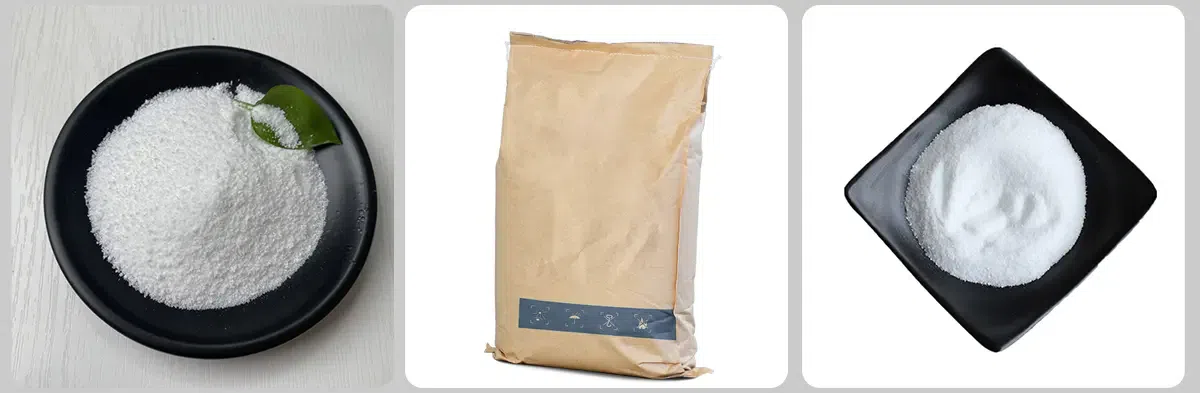
Cesium iodide Chemical Properties
Melting point | 626 °C (lit.) |
Boiling point | 1280 °C |
density | 4.51 g/mL at 25 °C (lit.) |
refractive index | 1.7876 |
Fp | 1280°C |
storage temp. | Keep in dark place,Inert atmosphere,Room temperature |
solubility | soluble in ethanol, methanol, acetone |
form | beads |
Specific Gravity | 4.51 |
color | White |
PH | pH(50g/l, 25℃) : 5.0~9.0 |
Water Solubility | 74 g/100 mL (20 ºC) |
Sensitive | Hygroscopic |
Merck | 142014 |
Exposure limits | ACGIH: TWA 0.01 ppm |
Dielectric constant | 5.6(Ambient) |
Stability: | Stable. Deliquescent. |
CAS DataBase Reference | 7789-17-5(CAS DataBase Reference) |
NIST Chemistry Reference | Cesium iodide(7789-17-5) |
EPA Substance Registry System | Cesium iodide (CsI) (7789-17-5) |
Hazard Codes | Xn,Xi |
Risk Statements | 36/37/38-42/43-43 |
Safety Statements | 22-36/37-45 |
RIDADR | UN 3077 9 / PGIII |
WGK Germany | 2 |
RTECS | FL0350000 |
F | 8 |
TSCA | Yes |
HS Code | 28276000 |
Toxicity | LD50 i.p. in rats: 1.4 g/kg (Cochran) |

Product Application of Cesium Iodide CAS#7789-17-5
Cesium iodide crystals are extensively employed as scintillation media in electromagnetic calorimeters built for particle physics research. They also function as optical elements inside Fourier-transform infrared (FT-IR) spectrometers, leveraging their superior infrared transmittance to serve as spectroscopic substrates.
When contrasted with the widely used potassium bromide optical windows, cesium iodide features a wider transmission window that stretches into the far-infrared band. Even so, cesium iodide optical crystals are comparatively soft and free of cleavage planes, which complicates the fabrication of flat, highly polished optical surfaces.
In addition, cesium iodide optical crystals require dry storage conditions to avoid degradation from humidity. A germanium thin-film coating deposited on the crystal surface can substantially mitigate adverse effects from ambient moisture while the optical window is being installed or serviced.