

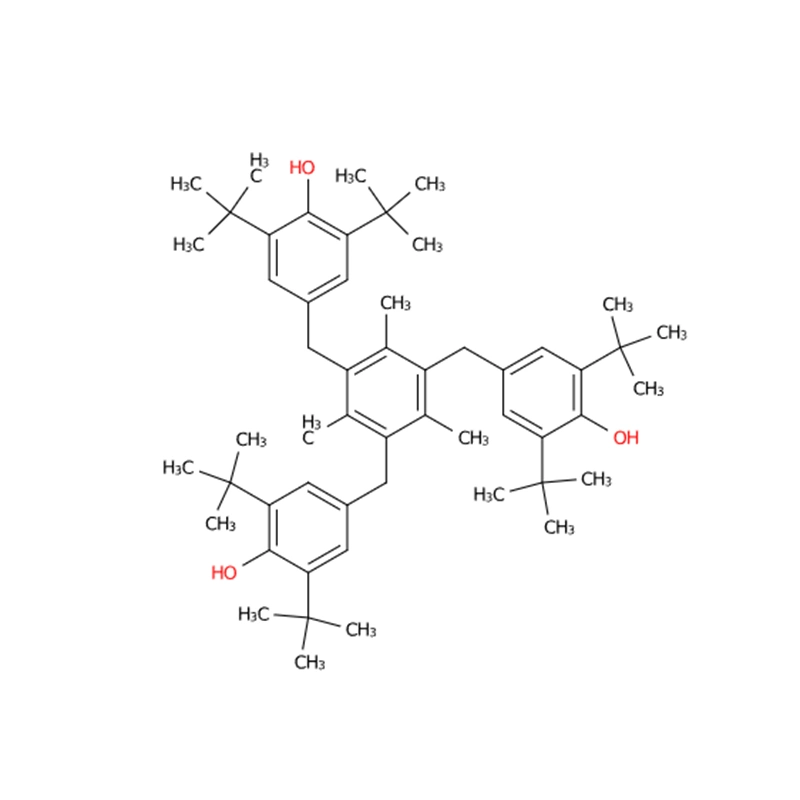
Products Description of Antioxidant 1330 (CAS#1709‑70‑2)
Antioxidant 1330 belongs to the hindered phenol family. It is supplied as white crystalline powder and features a melting point exceeding 244 °C. This substance does not dissolve in water. Its solubility data measured at 18 °C in different solvents are listed below: 20 g/100 g in benzene, 31.9 g/100 g in methylene chloride, 1.7 g/100 g in methylcyclohexane, 0.2 g/100 g in methanol and 0.1 g/100 g in isopropyl alcohol.
It maintains stable processing performance under high‑temperature conditions, with remarkable thermal tolerance. It is non‑staining, non‑polluting and low in toxicity. These advantages qualify it for diversified industrial formulation systems.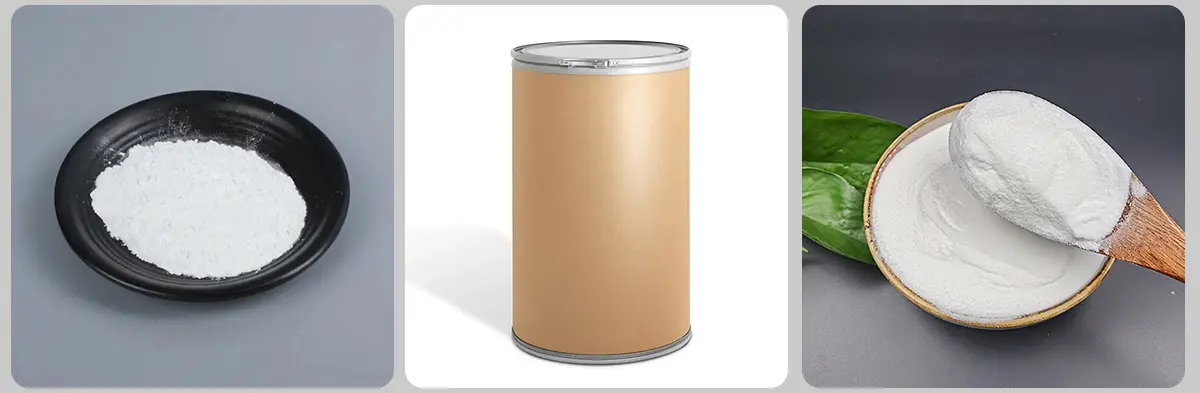
Antioxidant 1330 Chemical Properties
| Melting point | 248-250 °C(lit.) |
| Boiling point | 739.54°C (rough estimate) |
| density | 0.8883 (rough estimate) |
| refractive index | 1.5800 (estimate) |
| Fp | 321℃ |
| storage temp. | 2-8°C |
| solubility | Chloroform (Slightly), Methanol (Very Slightly, Heated, Sonicated) |
| pka | 11.91±0.40(Predicted) |
| color | White to Off-White |
| Water Solubility | 8.09μg/L at 20℃ |
| InChIKey | VSAWBBYYMBQKIK-UHFFFAOYSA-N |
| LogP | 17.17 |
| CAS DataBase Reference | 1709-70-2(CAS DataBase Reference) |
| EPA Substance Registry System | 1,3,5-Trimethyl-2,4,6-tris(3,5-di-tert-butyl-4-hydroxybenzyl)benzene (1709-70-2) |
| Hazard Codes | Xi |
| Risk Statements | 36/37/38 |
| Safety Statements | 26-36 |
| WGK Germany | 1 |
| RTECS | DC3750000 |
| HS Code | 2907299000 |
| Toxicity | LD50 oral in rat: 1500mg/kg |
Product Application of Antioxidant 1330 (CAS#1709‑70‑2)
As a macromolecular hindered phenol antioxidant, Antioxidant 1330 shows good compatibility with diverse polymer materials. Applicable substrates include thermoplastic polyesters, polyamides, styrene resins, polyolefins, PET, PBT, as well as polyurethane and natural rubber elastomers. It blends uniformly within resin systems and features notable strengths: anti-corrosion performance, resistance against solvent leaching, low volatility, high antioxidant efficiency and dependable electrical insulation.
It is a preferred choice for polyolefin products manufactured under high-temperature conditions, such as PP and PE pipes, injection moldings, wires, cables and similar end products.


