

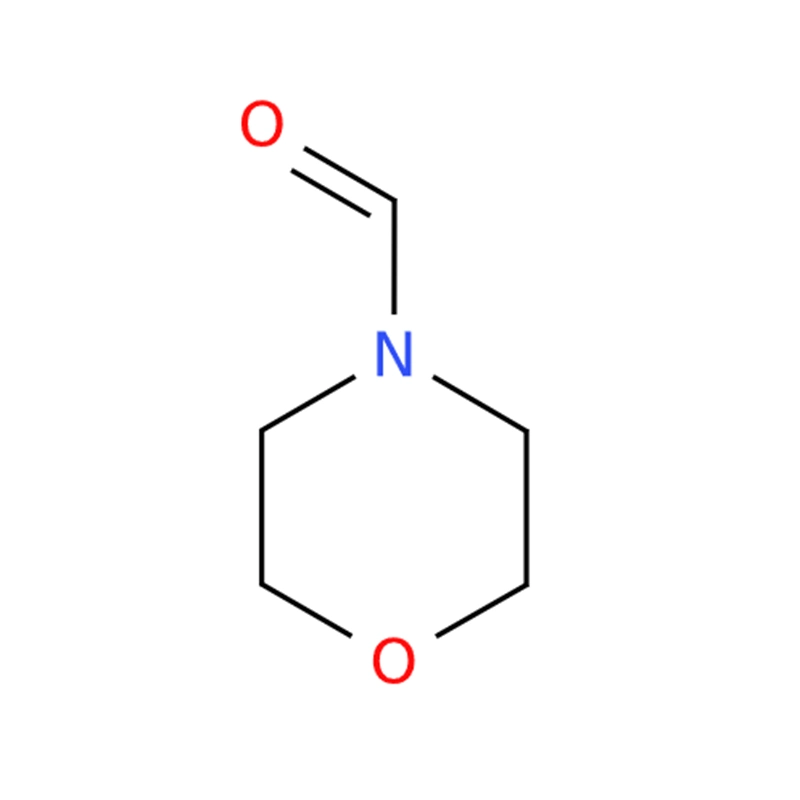
Products Description of 4‑Morpholinecarbaldehyde (CAS#4394‑85‑8)
N‑Formylmorpholine, abbreviated as NFM, functions as a vital organic solvent and high‑value feedstock for fine chemical manufacturing. At ambient temperature, it exists as a clear, colorless liquid and exhibits typical amide chemical traits. Its water solution carries weak alkalinity and may undergo hydrolysis to yield morpholine and formic acid when exposed to acidic or alkaline surroundings.
NFM is well known as an efficient extractant for isolating and refining aromatic hydrocarbons. Besides this core application, it also receives extensive use within synthetic fiber production and many other industrial branches.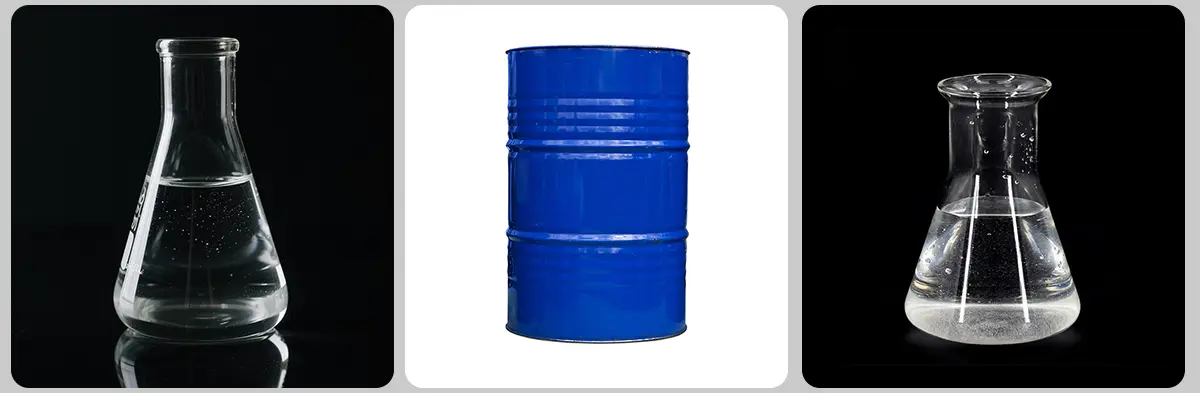
4-Formylmorpholine Chemical Properties
| Melting point | 20-23 °C (lit.) |
| Boiling point | 236-237 °C (lit.) |
| density | 1.145 g/mL at 25 °C (lit.) |
| vapor pressure | 0.03 hPa (20 °C) |
| refractive index | n20/D 1.485(lit.) |
| Fp | >230 °F |
| storage temp. | Store below +30°C. |
| solubility | SOLUBLE |
| pka | -0.75±0.20(Predicted) |
| form | Liquid |
| color | Clear yellow |
| PH | 10 (250g/l, H2O, 20℃) |
| explosive limit | 1.2-8.2%(V) |
| Water Solubility | SOLUBLE |
| Sensitive | Hygroscopic |
| BRN | 110293 |
| LogP | -1.2 at 23℃ |
| CAS DataBase Reference | 4394-85-8(CAS DataBase Reference) |
| NIST Chemistry Reference | N-Formylmorpholine(4394-85-8) |
| EPA Substance Registry System | 4-Morpholinecarboxaldehyde (4394-85-8) |
Safety Information
| Risk Statements | 36/37/38 |
| Safety Statements | 23-24/25 |
| WGK Germany | 3 |
| RTECS | QD9694000 |
| Autoignition Temperature | 345 °C DIN 51794 |
| TSCA | Yes |
| HS Code | 29349990 |
| Toxicity | LD50 orally in Rabbit: > 7360 mg/kg LD50 dermal Rabbit > 18400 mg/kg |
Product Application of 4‑Morpholinecarbaldehyde (CAS#4394‑85‑8)
N‑Formylmorpholine (NFM) serves as a key organic solvent and premium fine‑chemical feedstock. This compound is a colorless clear liquid under ambient temperature and possesses characteristic amide reactivity. Its aqueous solution shows weak alkalinity and is prone to hydrolysis, breaking down into morpholine and formic acid in acidic or alkaline environments.
It stands out as a high‑performance extractant for the recovery and separation of aromatic hydrocarbons. Accordingly, NFM is heavily utilized in synthetic fiber fabrication and a broad range of other industrial processes.