


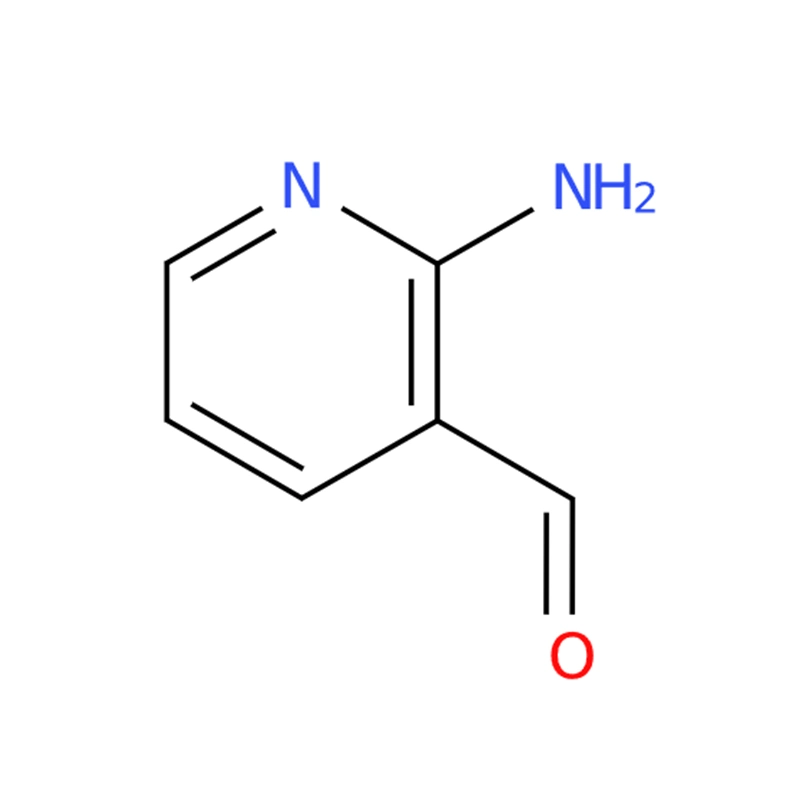
Product Description of 2-Amino-3-Pyridinecarboxaldehyde (CAS No. 7521-41-7)
2-Amino-3-pyridinecarboxaldehyde is an alkaline pyridine derivative that is extensively employed in organic synthesis and acts as a pharmaceutical intermediate. It supports the creation of pyridine-containing organic substances via condensation, cyclization and substitution reactions, which gives it great value for basic chemical research. Its molecular structure contains several reactive functional moieties: a pyridine ring, an amino group and a highly reactive aldehyde group, opening up abundant routes for chemical derivatization. A critical handling reminder: this compound is sensitive to oxidants. It tends to be oxidized into nitrogen oxides, which causes product degradation.
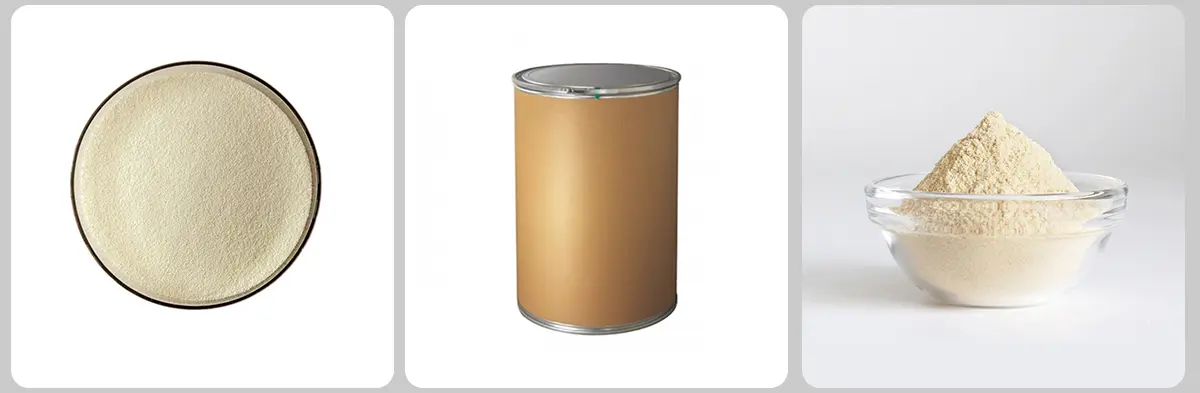
2-Amino-3-Pyridinecarboxaldehyde CAS#7521-41-7 Chemical Properties
| Melting point | 98-102 °C (lit.) |
| Boiling point | 290.7±25.0 °C(Predicted) |
| density | 1.264±0.06 g/cm3(Predicted) |
| Fp | >300℃ |
| storage temp. | Keep in dark place,Sealed in dry,Room Temperature |
| solubility | Chloroform (Slightly), Methanol (Slightly) |
| pka | 4.99±0.36(Predicted) |
| form | Powder, Crystals and/or Chunks |
| color | Yellow to light brown |
| Water Solubility | insoluble |
| Sensitive | Air Sensitive |
| BRN | 109598 |
| InChIKey | NXMFJCRMSDRXLD-UHFFFAOYSA-N |
| CAS DataBase Reference | 7521-41-7(CAS DataBase Reference) |
| Hazard Codes | Xi,Xn |
| Risk Statements | 36/37/38-20/21/22 |
| Safety Statements | 26-36-36/37/39 |
| WGK Germany | 3 |
| HazardClass | IRRITANT |
| PackingGroup | II |
| HS Code | 29339900 |

Product Applications of 2-Amino-3-Pyridinecarboxaldehyde (CAS No. 7521-41-7)
2-Amino-3-pyridinecarboxaldehyde leverages its amino and aldehyde groups for the preparation of pyridine-type organic ligands and functional small molecules. Such ligands are heavily deployed within coordination chemistry and catalytic systems. They are capable of coordinating efficiently with metal centers and facilitating selective, high-efficiency catalytic conversions in organic synthesis.
Furthermore, chemical modification on the pyridine ring permits the introduction of assorted functional substituents, granting access to a rich library of target functional molecules. The resulting products hold promising prospects across materials science, optoelectronic components, sensing technology and bioscience. Typical examples cover fluorescent probes, bioactive agents and high-performance functional materials.