


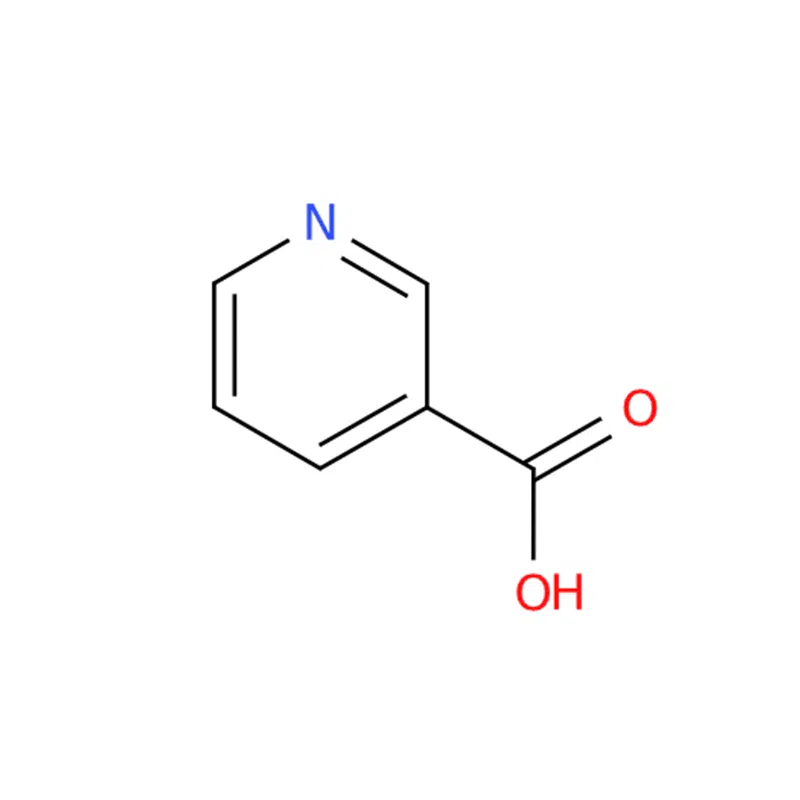
Nicotinic Acid CAS#59-67-6 (Vitamin B3)
Nicotinic Acid, alternatively referred to as Vitamin B₃, is an indispensable substance that carries great significance for human metabolism, pharmaceutical development and industrial utilization. It features the molecular formula C₆H₅NO₂ and a molecular weight of 123.11. Chemically named pyridine-3-carboxylic acid, it falls within the category of pyridine derivatives.
It ranks among the thirteen essential vitamins that the human body cannot synthesize sufficiently on its own and takes part in a host of core metabolic pathways. In the course of cellular respiration, it forms a fundamental structural part of coenzyme I (NAD) and coenzyme II (NADP), performing an irreplaceable function in the transformation and utilization of energy sourced from carbohydrates, lipids and proteins. Such bioactivity sustains the regular physiological operation of human tissues and organs.
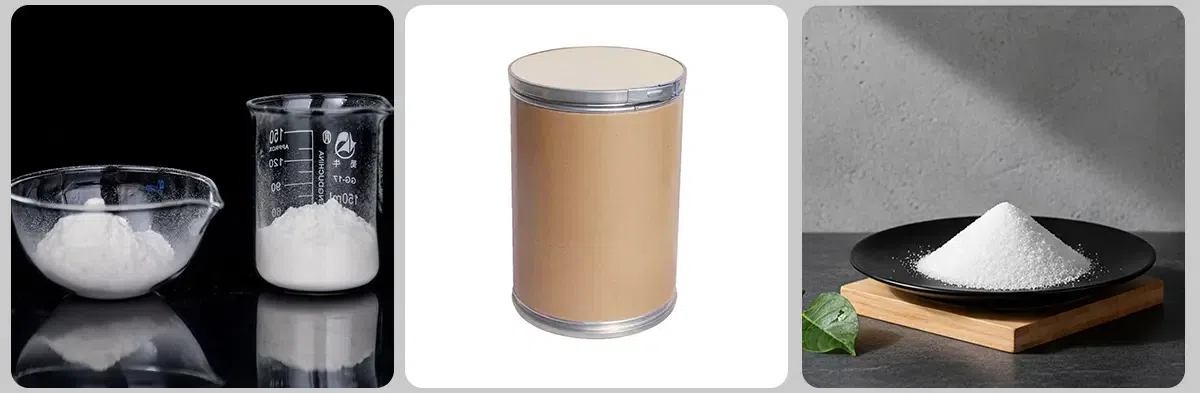
Nicotinic acid Chemical Properties
Product Name: | Nicotinic acid |
Synonyms: | BETA-PICOLINIC ACID;AKOS BBS-00003719;ACIDUM-NICOTINICUM;3-PICOLINIC ACID;3-CARBOXYPYRIDINE;RARECHEM AL BO 0217;TIMTEC-BB SBB004279;NICOTINIC ACID |
CAS: | 59-67-6 |
MF: | C6H5NO2 |
MW: | 123.11 |
EINECS: | 200-441-0 |
Product Categories: | carboxylic acid;NIASPAN;Vitamin B3;Building Blocks;Chemical Synthesis;Heterocyclic Building Blocks;Analytical Chemistry;Biochemistry;Nutrition Research;Pyridines;Vitamin B;Vitamin series;vitamin;Other APIs;Pyridine;Mass Spectrometry;Matrix Materials (MALDI-TOF-MS);Vitamins;Vitamins and derivatives;Vitamin Ingredients;Miscellaneous Compounds;Signalling;Aromatics;Intermediates & Fine Chemicals;Isotope Labelled Compounds;Pharmaceuticals;C6;Inhibitors;59-67-6;OLED |
Mol File: | 59-67-6.mol |
Melting point | 236-239 °C(lit.) |
Boiling point | 260C |
density | 1.473 |
bulk density | 330kg/m3 |
refractive index | 1.5423 (estimate) |
Fp | 193°C |
storage temp. | 2-8°C |
solubility | 18g/l |
pka | 4.85(at 25℃) |
form | Powder |
color | White to off-white |
PH | 2.7 (18g/l, H2O, 20℃) |
Odor | odorless to sl. odor, sour taste |
biological source | synthetic (organic) |
Water Solubility | 1-5 g/100 mL at 17 ºC |
Merck | 146525 |
BRN | 109591 |
BCS Class | 3 |
Stability: | Stable. Incompatible with strong oxidizing agents. May be light sensitive. |
InChIKey | PVNIIMVLHYAWGP-UHFFFAOYSA-N |
LogP | 0.36 |
CAS DataBase Reference | 59-67-6(CAS DataBase Reference) |
NIST Chemistry Reference | Niacin(59-67-6) |
EPA Substance Registry System | Nicotinic acid (59-67-6) |

Nicotinic acid participates critically in in-vivo hydrogen transfer reactions and aids in pellagra prophylaxis. It helps preserve the integrity of skin tissue and proper neural function, alongside supporting regular digestive performance. Both nicotinic acid and niacinamide are broadly adopted for the prevention and therapeutic intervention of pellagra, a disorder triggered by insufficient niacin intake.
Niacin is additionally deployed to regulate elevated serum cholesterol. Under specific circumstances, the co-administration of niacin and colestipol can deliver cholesterol-reducing outcomes comparable to those achieved by colestipol paired with statin regimens.
USP-grade niacin granules are frequently incorporated into food enrichment formulations, nutritional supplements, and utilized as pharmaceutical synthetic precursors. Feed-grade niacin functions as a vitamin additive for poultry, swine, ruminants, aquatic species, canines, felines and other livestock. Beyond these uses, it acts as a building block for preparing nicotinic acid derivatives and fulfills diverse industrial technical requirements.